


Ming Chi University of Technology Integrates Mandarin Learning with Cultural Experiences to Create a Diverse Learning Model for Migrant Workers
To help migrant workers in Taiwan improve their Mandarin proficiency and gain a deeper understanding of Taiwanese culture and daily life, the General Education Center at Ming Chi University of Technology has continued to extend language learning beyond the classroom through cultural and hands-on experiences. The initiative is carried out under the Ministry of Education’s University Social Responsibility (USR) Project – Northern Taiwan’s First Learning Corridor Museum Deepening and Sustainability Project, in conjunction with the Mandarin Language Training Program for Foreign Workers commissioned by the New Taipei City Government Labor Affairs Department.
On June 14, the University held a Migrant Worker Cultural Experience – Dragon Boat Festival Rice Dumpling (Zongzi) DIY Workshop. A total of 44 people, including migrant worker participants, instructors, and staff members, took part in the event. The participating migrant workers came from the Philippines, Indonesia, Vietnam, Thailand, Cambodia, India, and other countries. Through hands-on rice dumpling making, participants learned about Taiwan’s Dragon Boat Festival traditions while sharing food cultures from their home countries and engaging in cross-cultural exchange.
Professor Yen-Kuang Pu, Director of the General Education Center at Ming Chi University of Technology, said that the Mandarin language program for migrant workers aims not only to develop participants’ daily communication and workplace language skills, but also to provide more opportunities for them to learn about Taiwan and become more familiar with life in Taiwanese society. For this reason, the General Education Center has extended the Mandarin program into cultural experiences, covering traditional Taiwanese festivals, food culture, and local cultural tours. Through hands-on participation, migrant workers can apply what they learn in the classroom to real-life situations while gaining a deeper understanding of Taiwan’s history, culture, and society.
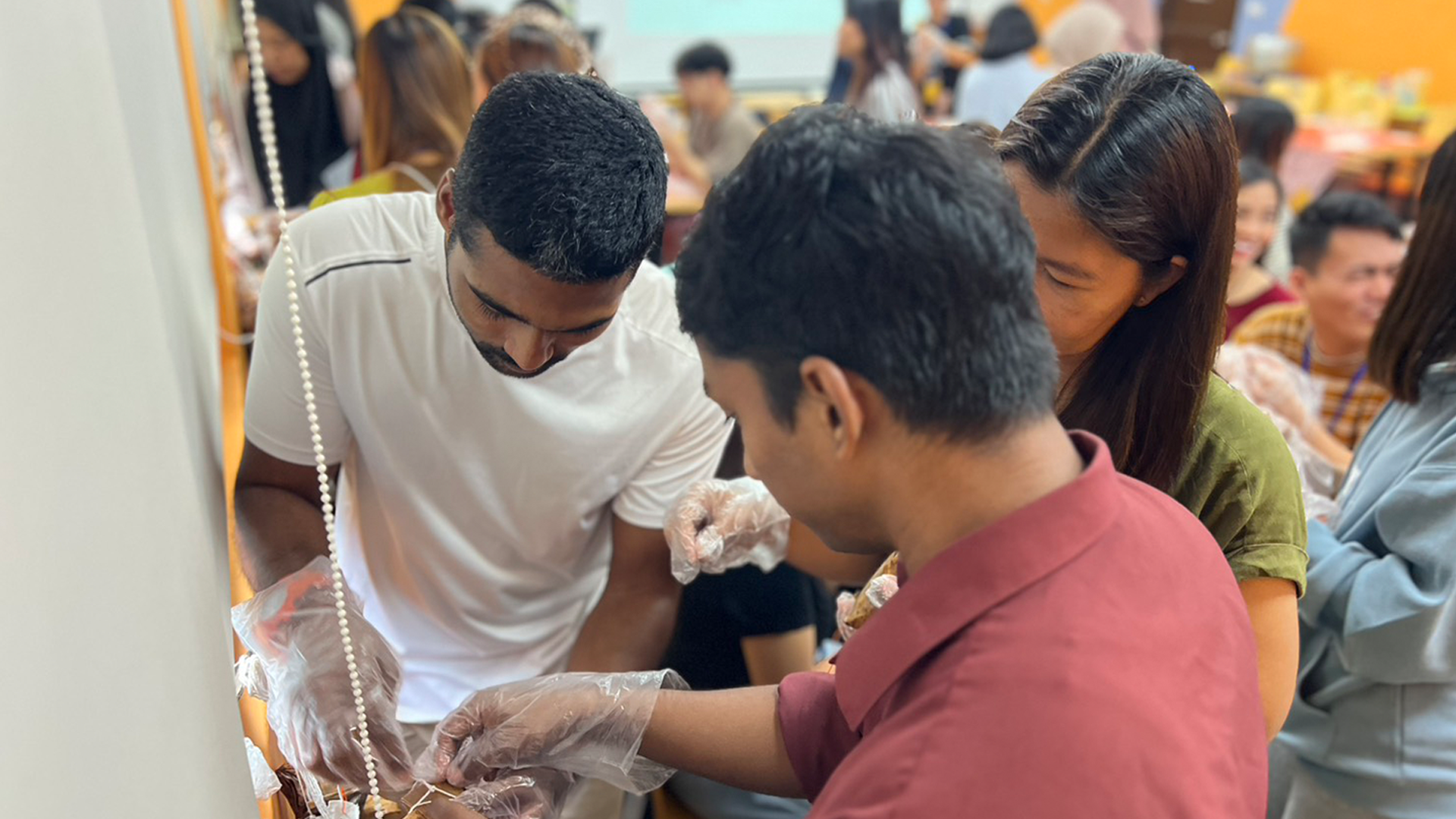
During the Dragon Boat Festival rice dumpling workshop, instructors introduced the origins of the festival, the story of Qu Yuan, and traditional Taiwanese customs. Participants then learned how to make Taiwanese zongzi step by step, including folding the bamboo leaves, adding glutinous rice and fillings, shaping the dumplings, and tying them securely with string. Many participants were making Taiwanese zongzi for the first time. From initially struggling with how to fold and secure the leaves to gradually mastering the techniques, they encouraged and helped one another throughout the process. The workshop was filled with laughter and interaction, and completing their own handmade zongzi gave participants a strong sense of accomplishment while providing a hands-on introduction to Taiwanese festival culture.
The workshop also provided an opportunity for participants to share the rice dumplings and festive foods of their home countries. Participants from Indonesia, Vietnam, Thailand, and other countries exchanged stories about the shapes, wrapping methods, ingredients, and ways of eating their traditional rice-based foods. Although each country has its own distinctive food traditions, participants discovered that festival foods often carry similar meanings of family reunion, blessings, gratitude, and remembrance. Through this exchange, Taiwanese zongzi and traditional foods from different countries became a bridge connecting diverse cultures, allowing participants not only to learn about Taiwanese culture but also to share their own cultural traditions.
Adu, an Indonesian migrant worker participant, expressed her appreciation to Ming Chi University of Technology for providing not only Mandarin classes but also a variety of cultural experience activities that give migrant workers more opportunities to learn about Taiwan. Adu has previously participated in the Sanxia Hakka Cultural Experience and the Qingming Festival Mugwort Rice Cake DIY Workshop. She also took part in the Dragon Boat Festival zongzi workshop and looks forward to joining Ming Chi University of Technology again in August for a guided tour of the New Taipei City Gold Museum and a hands-on gold-panning experience, continuing her exploration of Taiwan’s local culture.
Ming Chi University of Technology emphasizes that Mandarin education for migrant workers is not limited to language development. It is also an important way to help migrant workers better understand Taiwan and adapt to life in Taiwanese society. By combining Mandarin learning with cultural experiences, participants can interact with people from different cultural backgrounds, build meaningful life experiences and social connections, and promote mutual understanding and inclusion among diverse cultures.
Looking ahead, Ming Chi University of Technology will continue to integrate resources from various academic programs and campus initiatives to provide more educational, practical, and hands-on learning opportunities. In addition to Taiwanese festival culture, local cultural tours, and heritage experiences, the University plans to introduce interdisciplinary activities related to drone technology, 3D printing, and smart technologies. These activities will allow migrant workers to explore technology and innovative applications while learning Mandarin and Taiwanese culture, broadening their knowledge and global perspectives. Through diverse learning opportunities that combine language, culture, and technology, the University hopes to enhance migrant workers’ ability to adapt to life in Taiwan and strengthen their workplace competitiveness, while advancing the core values of the University Social Responsibility (USR) initiative: lifelong learning, social inclusion, and community engagement.
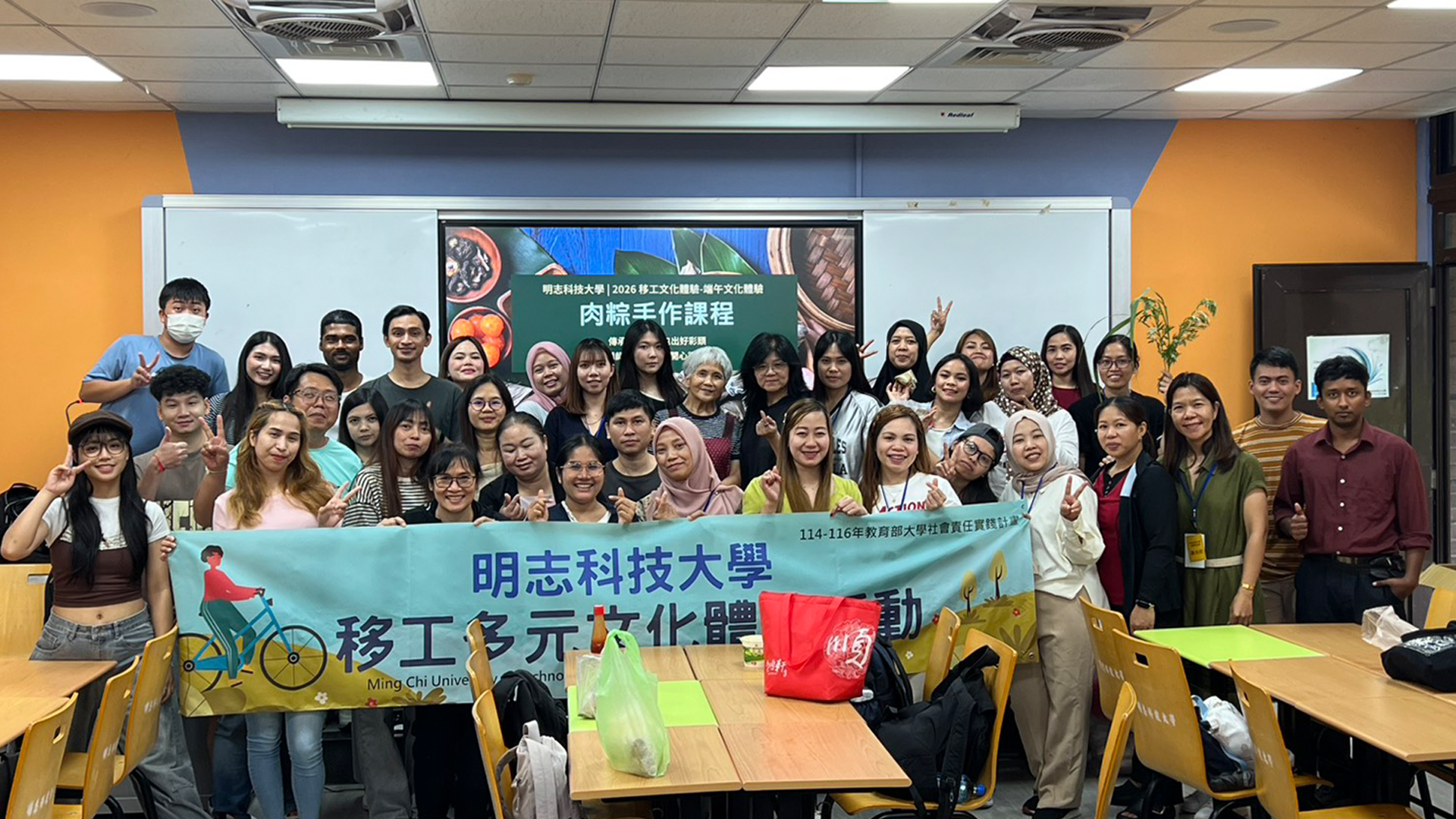
Image (No. 1) Description: Participants pose for a group photo before the end of the activity.
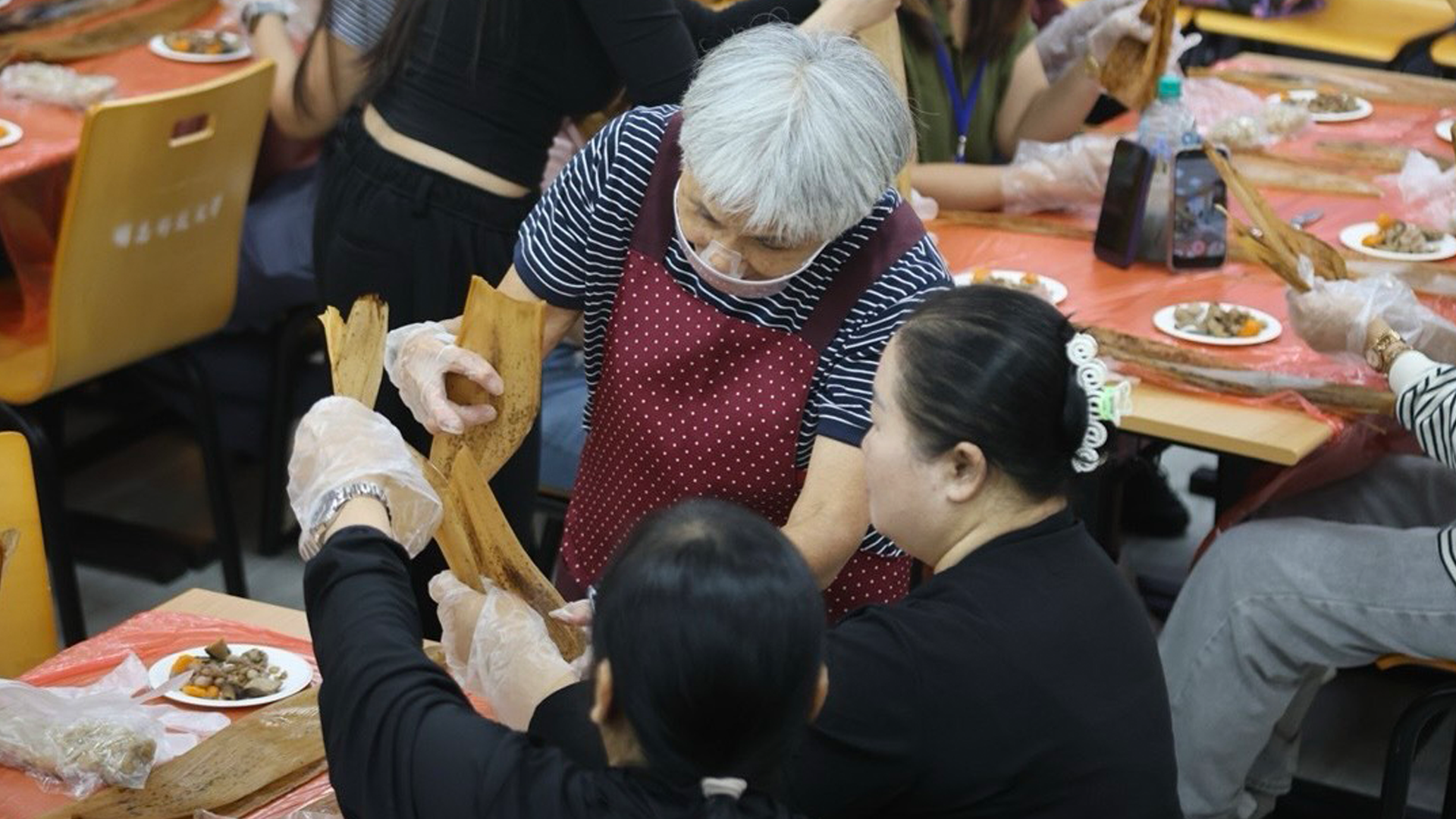
Image (No. 2) Description: Instructor Hsiu-Lan carefully demonstrates and explains the steps of making traditional rice dumplings.
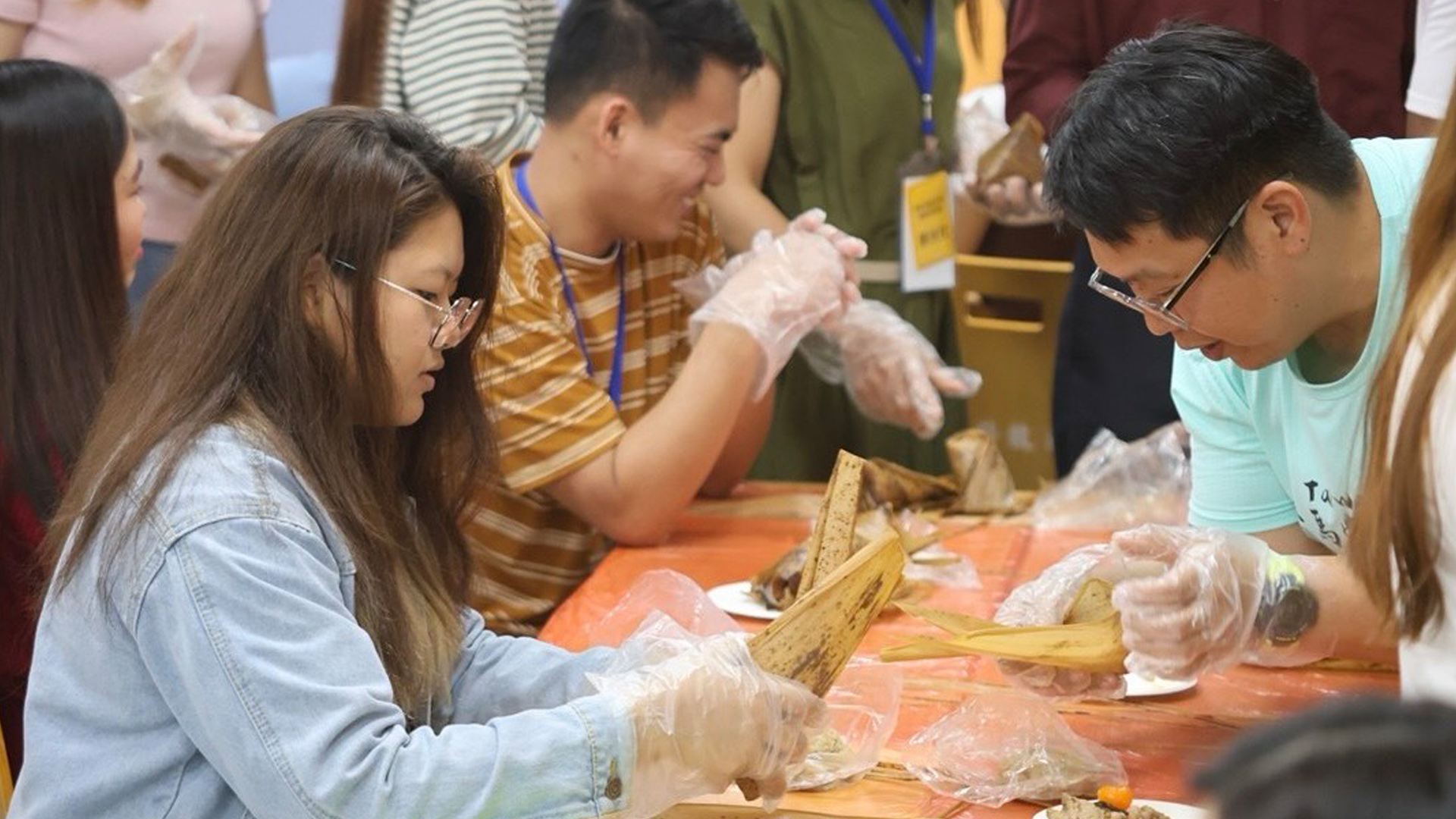
Image (No. 3) Description: Participants from different countries (left: Thailand; right: the Philippines) communicate with each other using simple Mandarin, fostering cross-cultural interaction.
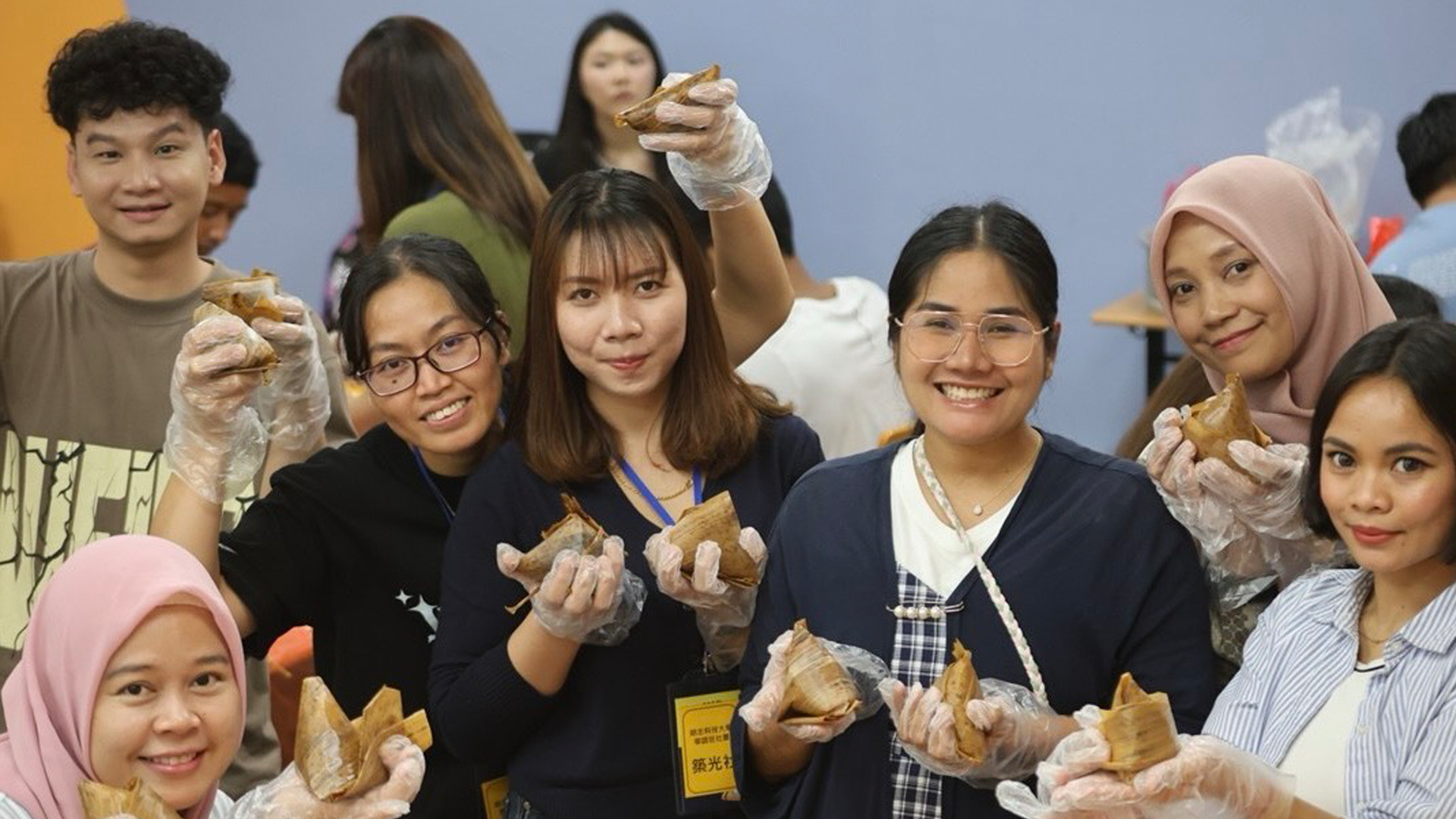
Image (No. 4) Description: In regular Mandarin classes, participants have fewer opportunities to interact in such a relaxed setting. Through this cultural experience activity, participants from Indonesia, the Philippines, Vietnam, and Cambodia naturally engaged with one another and learned through cross-cultural exchange.
Image (No. 5) Description: A male participant from India also focuses attentively on learning how to make traditional rice dumplings and experiencing Taiwanese traditional culture.
