


Mentors and Students Partnering for a Green Future: Synthesizing LDH Catalytic Materials to Unlock New Environmental Opportunities
Ming Chi University of Technology (MCUT) actively promotes practical teaching through its "Mentorship System" as part of the Higher Education Sprout Project. By opening laboratories to freshmen as early as their second semester, the university allows students to receive professional guidance and engage in hands-on projects ahead of schedule. This approach helps students define their learning goals while cultivating technical and practical talents for the vocational sector.
In this innovative and practice-based research project, students and faculty collaborated on the synthesis of Layered Double Hydroxides (LDHs) and explored their potential applications as catalytic materials for environmental pollutant treatment. The research began with material synthesis and extended to structural analysis and catalytic performance testing. This allowed students to establish a deep connection between theory and experimentation, experiencing the complete lifecycle of a research project.
The project adopted a mentorship learning model where the teacher serves not only as an instructor of knowledge but also as a guide and partner on the research journey. Under the mentor's leadership—from literature review and experimental design to parameter optimization—students gradually learned how to solve problems using scientific methods. Throughout this process, students mastered LDH synthesis techniques and structural characteristics while gaining an understanding of the principles behind environmental catalysis. Each experimental adjustment and data analysis served to mature the students' research capabilities and logical thinking.
For the mentors, this collaborative model represents a journey of mutual growth. While guiding students, teachers constantly reflect on their pedagogical methods to more effectively inspire creativity and independent thinking. Through continuous exchange and discussion, mentors and students overcame research challenges together, gaining invaluable experience and inspiration.
Ultimately, this research project centered on LDH synthesis not only demonstrated significant progress in the students' professional knowledge and experimental skills but also highlighted the immense value of mentorship in scientific education. It is more than just an academic exploration; it is a collaborative learning journey toward green technology and a sustainable future.
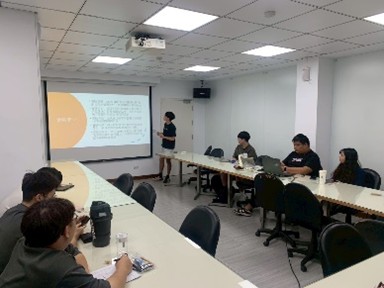
Image (No. 1) Description: Students and mentors discussing experimental design
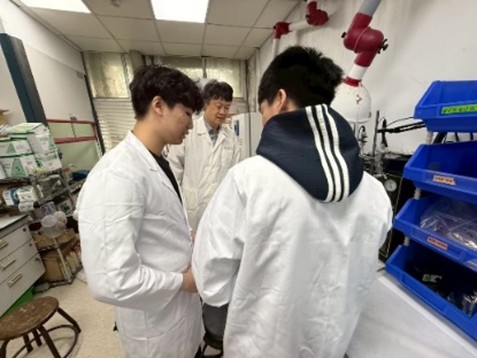
Image (No. 2) Description: Students learning the procedures for LDH synthesis
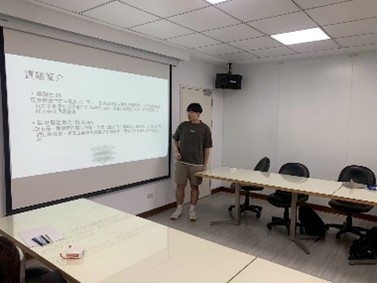
Image (No. 3) Description: Students presenting the final experimental design briefing
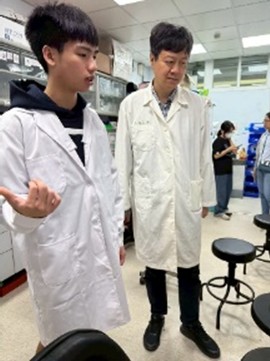
Image (No. 4) Description: Final project results report
中文:師徒攜手共創綠色未來-合成LDHs催化材料,開啟環保新契機
This article is simultaneously published in the 44th edition of the SDGs E-paper.
