


Ming Chi University of Technology and Shan-Jiao Community Join Hands to Inspire Young Volunteers Through Local Culture and Community Exploration


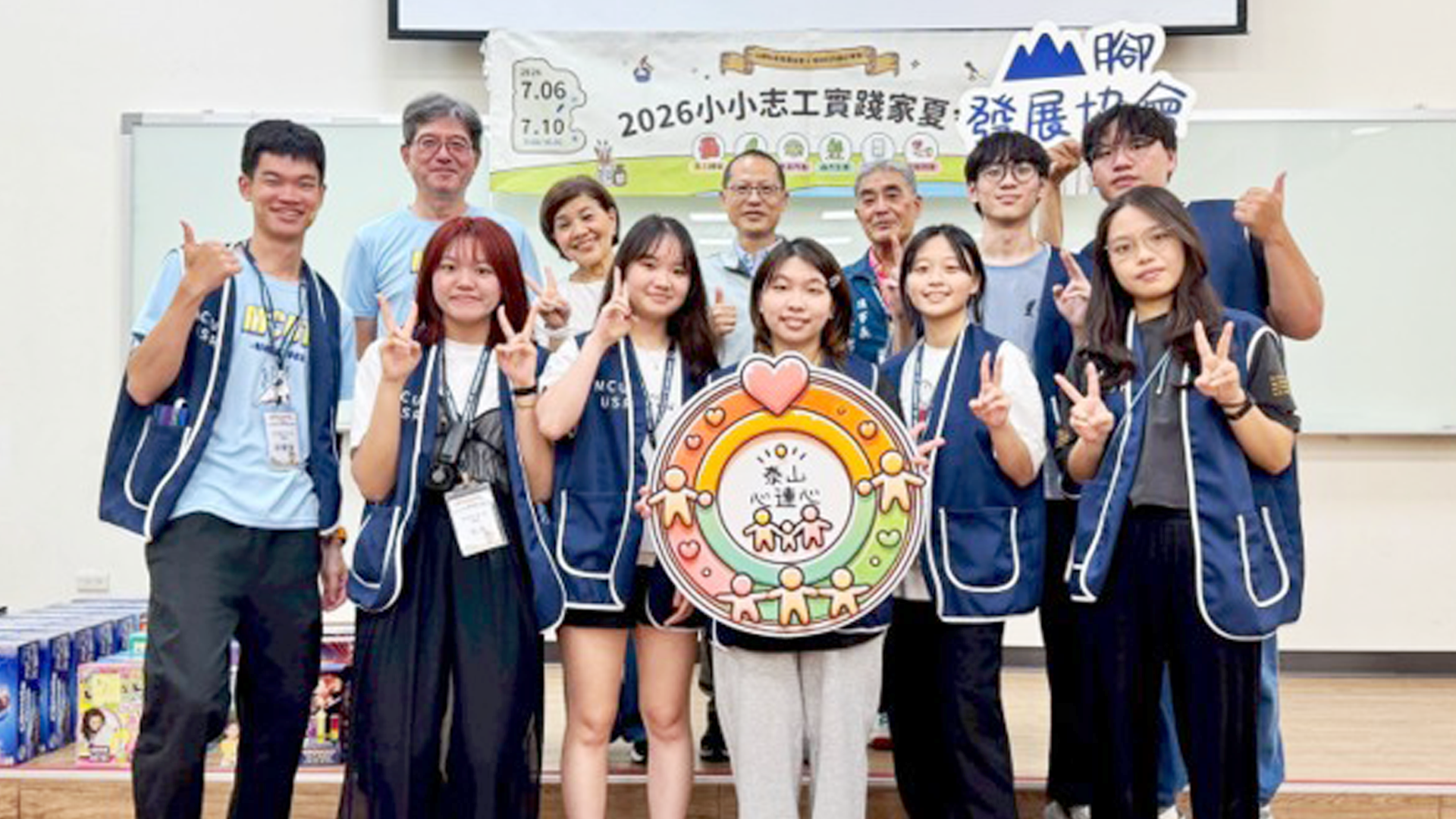
To deepen its engagement with the local community and fulfill its University Social Responsibility (USR), Ming Chi University of Technology (MCUT), in collaboration with the Shan-Jiao Community Development Association in Taishan District, organized the “2026 Little Volunteer Practitioners Summer Camp.” Through a diverse range of activities, including cultural exploration, ecological education, hands-on experiences, tour guide training, and volunteer service, the camp encouraged children to step away from the virtual world of digital devices and engage with their communities and hometowns. Through hands-on learning and interaction, participants developed an understanding of local culture, environmental awareness, and a spirit of service learning. A total of 33 elementary school students participated in the camp. In addition to children from Taishan and Xinzhuang, participants also came from Taoyuan, Zhonghe, and Banqiao, embarking together on a rich and rewarding journey of local cultural exploration.
Centered on “local cultural exploration,” the camp connected Taishan’s local characteristics with multicultural education. The children visited the Taishan Meining Doll Museum to learn about doll cultures from Southeast Asia and other countries. Through everyday objects and cultural stories, they gained a better understanding of diverse ethnic groups and developed a broader perspective grounded in respect for differences and cultural understanding. The program also incorporated rice culture and children’s picture books to introduce the historical development of the former port settlements of Taishan and Xinzhuang. By exploring local lifestyles, industries, and cultural contexts, the children gradually developed a stronger sense of identity and connection with their hometown.
To help the children progress from “learning about culture” to becoming “promoters of culture,” the camp also drew upon MCUT’s professional educational resources. Participants entered the university’s professional recording studio to receive tour guide and interpretation training. Through lessons on oral communication, tour guiding techniques, and cultural interpretation, combined with hands-on practice, the children developed the skills needed to serve as “Little Tour Guides” at the Meining Doll Museum. Through repeated practice and sharing, the children gained confidence in expressing themselves and learned how to introduce the local culture they had discovered to others, putting the principles of service learning and civic engagement into practice.
In addition to cultural learning, environmental education was integrated into the camp curriculum. The children visited MCUT’s Nine Tribes Park, where they observed the ecology of insects such as rhinoceros beetles and stag beetles and learned about the rich biodiversity found on campus. Through direct observation and exploration, the children began to understand the importance of environmental conservation by connecting with nature. They also gained an understanding of the relationship between people and the natural environment, helping them incorporate the concept of ecological sustainability into their everyday lives.
Another highlight of the camp was its continuation of the “intergenerational inclusion”理念 long promoted by the Shan-Jiao community. Elderly residents from local senior community centers in Taishan were invited to serve as instructors, guiding the children in making traditional mochi and creating traditional calligraphy and paintings. The elders passed down their life experiences and traditional skills to the younger generation, while the children responded with curiosity and enthusiasm. Through hands-on activities and face-to-face interaction, a natural form of intergenerational exchange emerged. This not only helped preserve and pass on local cultural skills but also enabled the wisdom and life experiences of older adults to continue contributing to the community, putting the理念 of “intergenerational inclusion and community co-learning” into practice.
Looking ahead, Ming Chi University of Technology will continue to combine the university’s professional expertise with local resources to deepen its practice of University Social Responsibility. By working closely with the community, MCUT aims to create learning environments that integrate cultural heritage, educational innovation, and sustainable development. Starting with “getting to know their hometowns,” children will be encouraged to become young practitioners who care about their communities, participate in local affairs, and serve others.
Image (No. 1) Description: Senior students visited the Meining Doll Museum, learning tour guiding skills through hands-on observation and interaction while exploring local culture and industry stories.
Image (No. 2) Description: Students entered the recording studio to record tour guide narration, developing their communication skills and tour guiding techniques through hands-on practice.
Image (No. 3) Description: Younger students learned about Indonesian culture through dessert-making activities, experiencing the unique characteristics and魅力 of multicultural traditions.
Image (No. 4) Description: MCUT students served as camp counselors, accompanying and guiding the children through various activities while developing communication, teamwork, and leadership skills through service.
