


Ming Chi University of Technology Showcases Innovative Antibacterial Material Made from Waste Eggshells at BIO Asia 2026
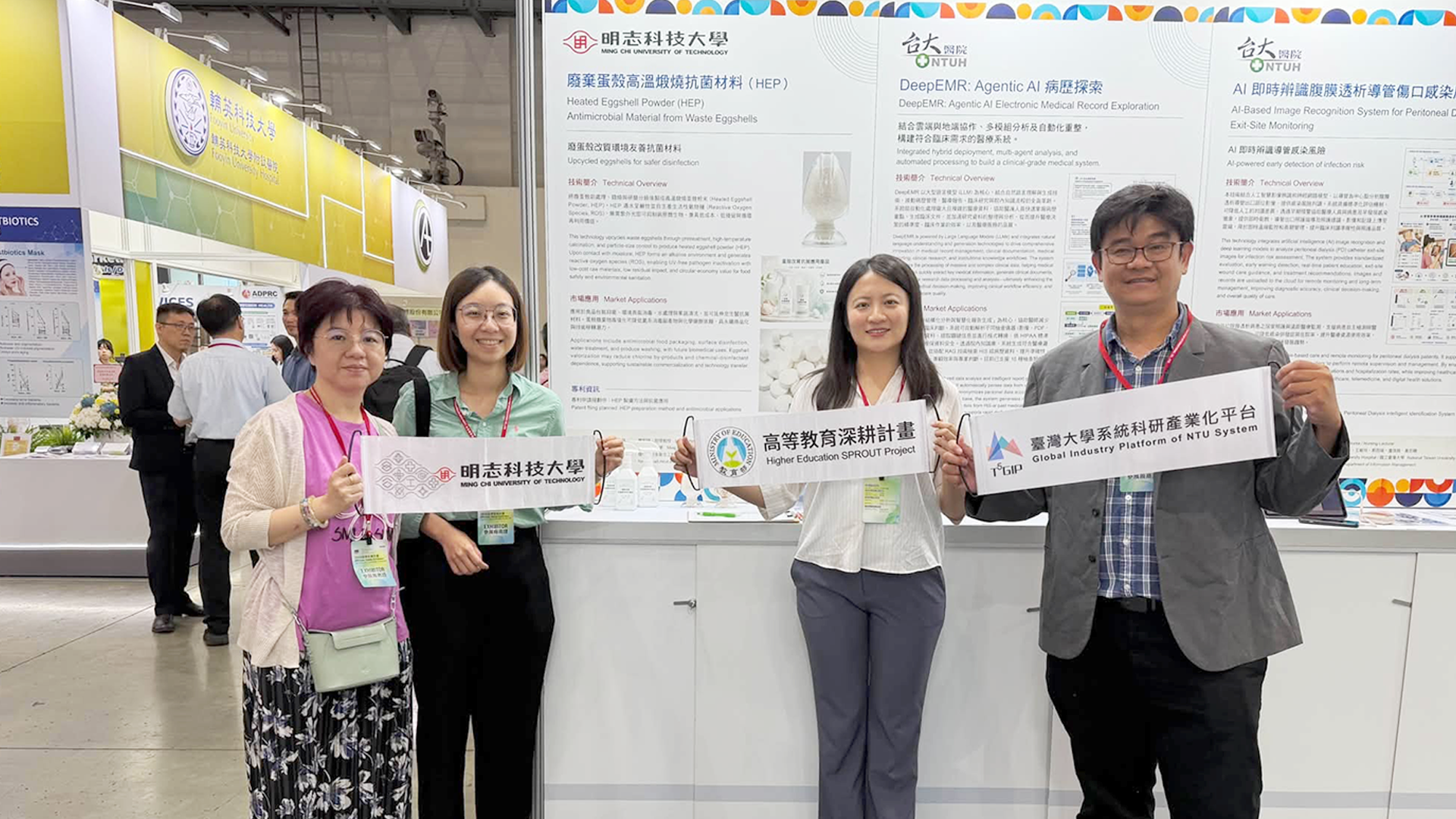
Ming Chi University of Technology (MCUT) is committed to advancing the commercialization of research outcomes while strengthening inter-university research collaboration and industry partnerships. This year, MCUT joined National Taiwan University’s research commercialization platform in participating in BIO Asia–Taiwan 2026, held from July 16 to 19 on the 4th floor of Taipei Nangang Exhibition Center, Hall 1. At the exhibition, MCUT showcased innovative technologies in environmental sustainability, highlighting the University’s research achievements and application potential in the circular economy.
The T5-GIP Platform brings together five universities—National Taiwan University, National Taiwan University of Science and Technology, National Taiwan Normal University, Chang Gung University, and Ming Chi University of Technology. By integrating research capabilities and industry resources across these institutions, the platform promotes the commercialization of research outcomes with market potential, while connecting academic innovation with industry needs and market opportunities. Through these efforts, T5-GIP facilitates technology exchange, industry-academia collaboration, and the translation of research achievements into practical applications.
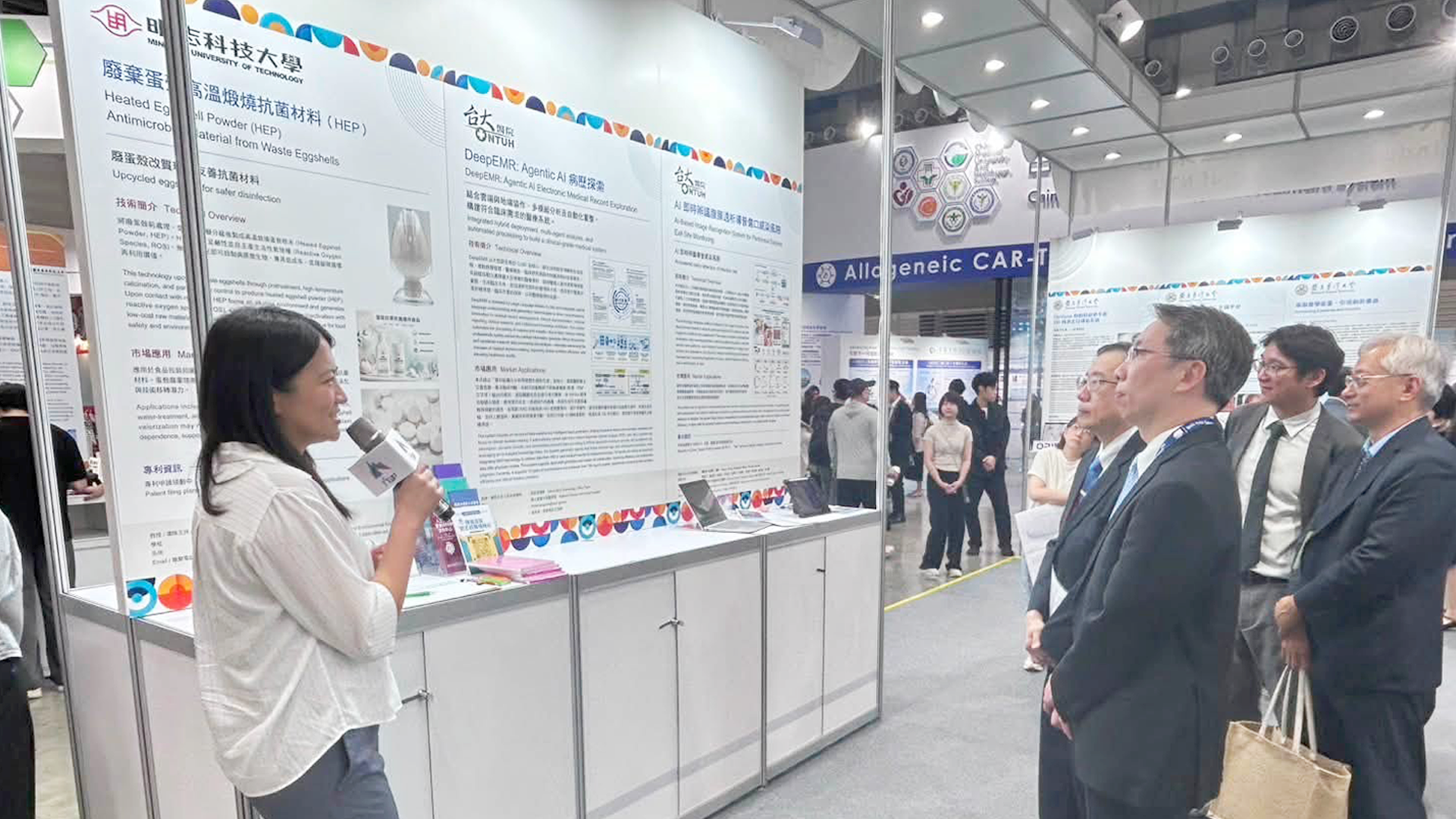
At the exhibition, Associate Professor Li-Ting Yen from the Department of Safety, Health and Environmental Engineering at MCUT showcased her research achievement, “High-Temperature Calcined Antibacterial Material from Waste Eggshells (HEP).” The technology utilizes waste eggshells generated by households and the food industry as raw materials and transforms them through a high-temperature calcination process into antibacterial materials with promising application potential, creating new value from waste resources. Beyond the development of innovative antibacterial materials, the technology reintegrates waste into the resource cycle, putting the principles of waste valorization and the circular economy into practice while demonstrating MCUT’s research achievements in environmental sustainability and innovative materials technology.
Through its participation in BIO Asia 2026, MCUT not only showcased its research capabilities in environmental sustainability and innovative materials, but also leveraged the T5-GIP Research Commercialization Platform to collaborate with partner universities and strengthen connections with industry. These efforts enable MCUT to better understand market needs and emerging technology trends, expand the industrial application potential of its research outcomes, and create further opportunities for industry-academia collaboration, technology transfer, and research commercialization.
Image (No. 1) Description: Dr. Kuei-Chih Feng (right), Director of the Industry Development Center at MCUT, and Dr. Li-Ting Yen (second from right) from the Department of Safety, Health and Environmental Engineering participate in BIO Asia 2026, showcasing MCUT’s achievements in research innovation and industry collaboration.
Image (No. 2) Description: Dr. Li-Ting Yen (left) from the Department of Safety, Health and Environmental Engineering at MCUT presents and explains her research technology at BIO Asia 2026.
