


Bridging Industry Trends and Enhancing Practical Teaching: Industrial Training Program on Lithium Battery Energy Storage Materials
With the global transition toward renewable energy and net-zero carbon emissions accelerating, electric vehicles and large-scale energy storage systems are developing rapidly. Lithium battery technology has become a key component supporting the next generation of energy infrastructure. From material innovation and manufacturing optimization to battery safety and system integration, advancements in energy storage technologies play a crucial role in shaping industrial competitiveness and national energy strategies. In this context, strengthening the professional capacity of university faculty and enhancing their understanding of industry practices have become essential for cultivating future talent.
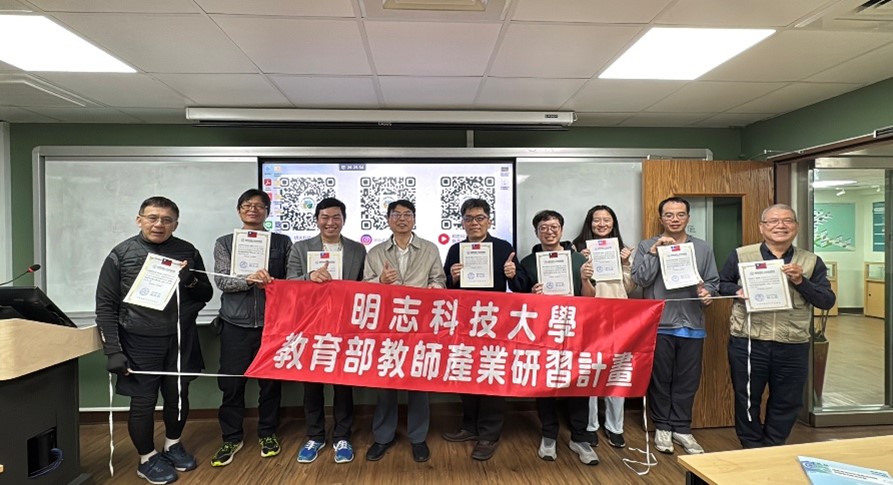
Supported by the Ministry of Education's Faculty Industrial Training Program for the 114 Academic Year, the Energy Battery Talent and Technology Cultivation Base at Ming Chi University of Technology recently organized the training program titled "Practical Training on Lithium Battery Energy Storage Materials and Applications." Faculty members from Ming Chi University of Technology and other universities and colleges were invited to participate. The program combined professional lectures with hands-on practice, providing a platform for cross-institutional exchange and technical knowledge sharing.
The training covered topics including lithium battery material composition, fundamental battery structures and operating principles, characteristics of cathode and anode materials, slurry processing and electrode fabrication techniques, battery safety management, and future trends in solid-state battery technologies. Participants also learned about the key components of lithium batteries—cathode materials, anode materials, electrolytes, and separators—and their interactions, helping them understand the relationship between materials and battery performance.
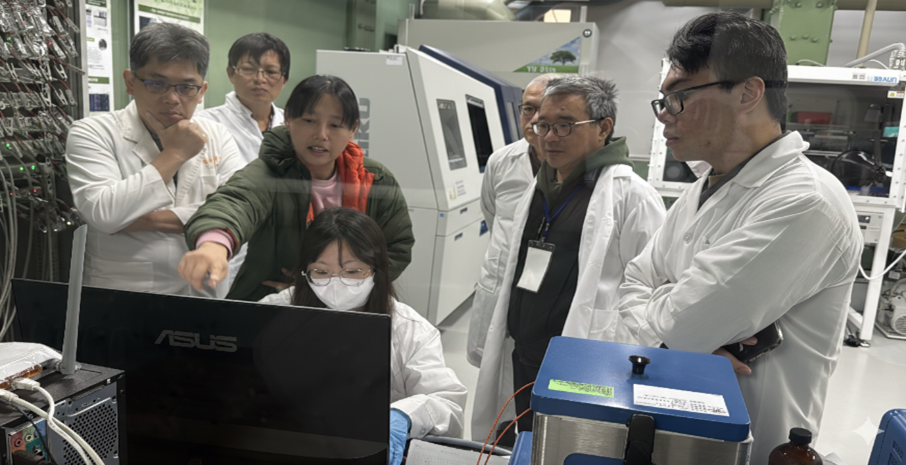
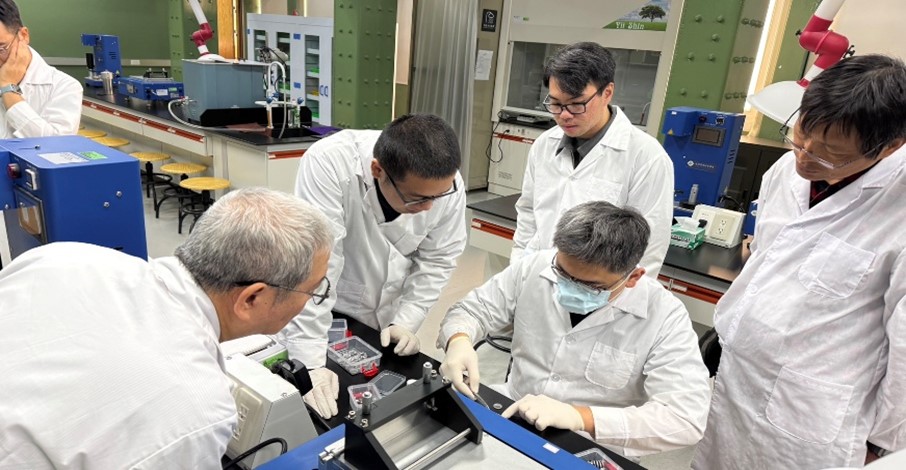
In addition to lectures, hands-on sessions were arranged for coin-cell battery assembly and testing. Participants experienced the complete process of lithium battery fabrication and evaluation, including electrode preparation, cell assembly, charge–discharge testing, and data analysis. These practical sessions enabled faculty members to better understand battery performance evaluation and cycle-life assessment, allowing them to integrate real-world industry experience into their teaching.
The program also featured several industry seminars covering topics such as trends in anode materials, advances in silicon–carbon technologies, and the development of high-energy-density batteries. Through interactions with industry experts, participating faculty members gained deeper insights into current technological developments and potential opportunities for future curriculum design and inter-university collaboration.
Through this program, a comprehensive learning framework integrating theoretical knowledge, material analysis, battery assembly, and data interpretation was established. Moving forward, the Energy Battery Talent and Technology Cultivation Base at Ming Chi University of Technology will continue to promote collaboration between academia and industry, strengthening professional education in energy storage technologies and cultivating talents to support Taiwan's energy transition and the development of key industries.
Image (No. 1) Description: Group photo of program attendees after completing the Lithium Battery Energy Storage Materials and Applications Practical Training Program.
Image (No. 2) Description: Program attendees conducting battery measurement data analysis and technical discussions in the laboratory.
Image (No. 3) Description: Hands-on training session on coin-cell battery assembly, allowing attendees to experience the lithium battery fabrication process.
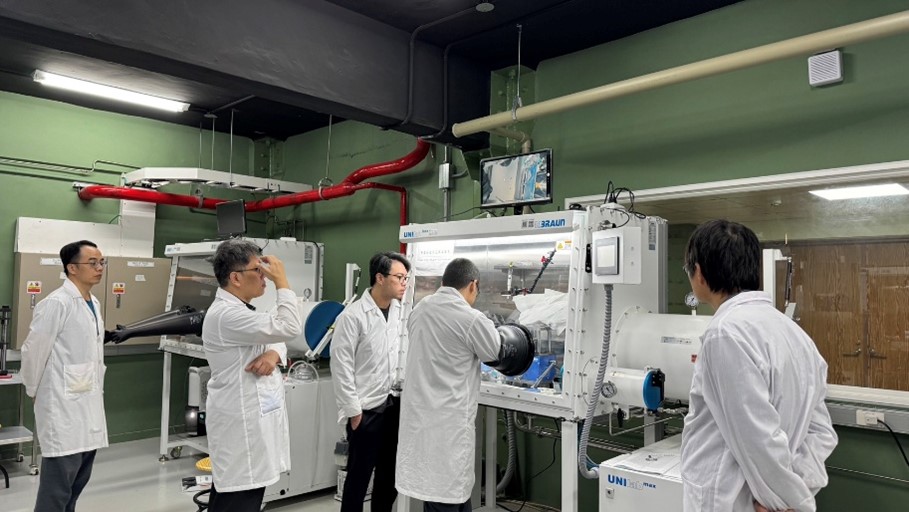
Image (No. 4) Description: Attendees observing lithium battery assembly procedures using a glovebox system in the laboratory environment.
中文:接軌產業脈動,深化實務教學 —鋰電池儲能材料產業研習課程
This article will be simultaneously published in the SDGs E-paper.
