


Foreign Languages Learning Lecture: English Career Planning and Competitiveness for University of Technology Students
An invited foreign languages learning lecture featured Adjunct Assistant Professor Ching-Lu Wang from National Taipei University of Technology, who shared insights on the topic “English Career Planning and Competitiveness for University of Technology Students.” Professor Wang emphasized that English proficiency is not merely a graduation requirement, but a crucial gateway to the international stage.
The lecture guided students in understanding how to align their English learning goals with career development. From international collaboration to overseas study opportunities, students were encouraged to leverage language proficiency as a competitive advantage. Through practical cases and concrete strategies, the lecture helped technology university students cultivate English competitiveness that integrates professional expertise with a global perspective, preparing them for future careers.
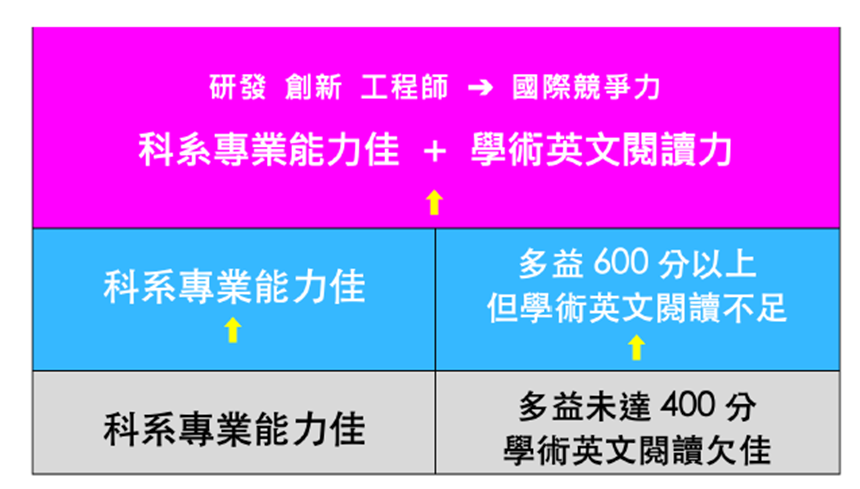
Professor Wang pointed out that while students at universities of technology generally demonstrate strong disciplinary expertise, many fail to reach a TOEIC score of 400, resulting in weak academic English reading ability. Therefore, he encouraged students to aim for at least a TOEIC score of 600, which would significantly enhance their academic reading competence and, in turn, their international competitiveness.
In other words, beyond possessing basic employability skills, students who aspire to advance further must develop academic reading abilities that go beyond TOEIC requirements. Emphasis should be placed on reading proficiency, as reading ability represents national strength and is key to expanding international competitiveness.
The speaker stressed that perseverance matters more than intelligence when learning English. Having a beginner-level foundation is not a disadvantage; learning English is not about who is better, but who persists. Those who persevere ultimately succeed. To improve listening skills, students should start with pronunciation. Fluency is more important than accuracy, and communication is more important than accent. Accurate pronunciation enhances listening comprehension. When encountering unfamiliar or difficult words, students are encouraged to repeat them up to 100 times to reinforce memory.
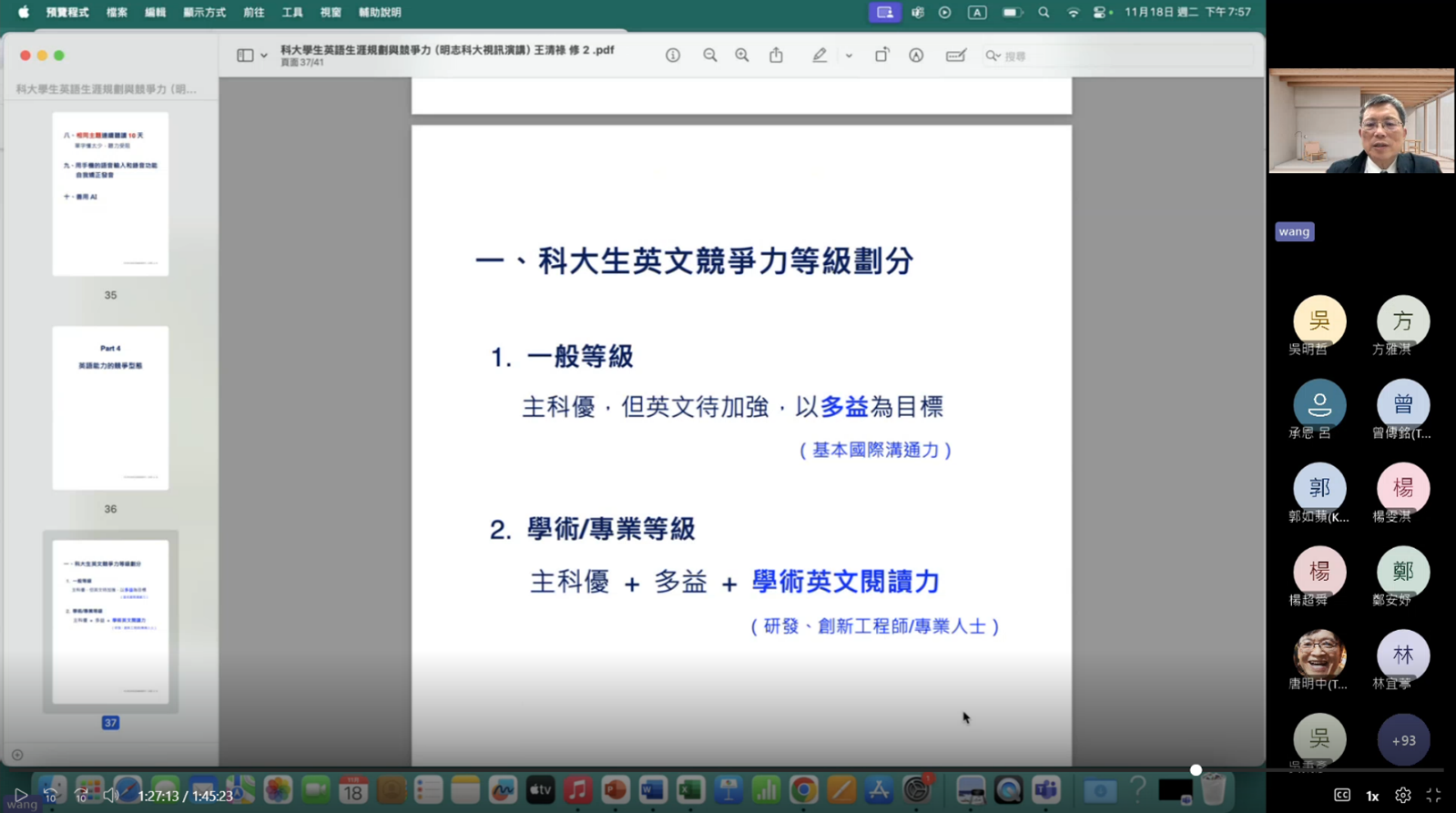
Language proficiency is inherently competitive and can be categorized into general-level competence and academic/professional-level competence as learning targets. Most technology university students fall within the general level: they excel in their major fields but need to strengthen English. By setting TOEIC as a benchmark, students can build basic communication skills and sufficient international communication competence, which are essential for standing out.
To advance to the academic and professional level, students should combine strong disciplinary expertise with a TOEIC score of 600 or above, along with solid academic English reading skills. This combination enables them to become elite professionals, such as R&D and innovation-oriented engineers with global competitiveness.
By planning learning objectives according to different language proficiency levels, the lecture proposed a progression starting from fundamentals—pronunciation—then extending to listening, reading, and ultimately academic English reading. In summary, according to the speaker’s perspective, reading proficiency equals national strength.
Image (No. 1) Description: Professor Ching-Lu Wang analyzed the classification of English competitiveness levels among university of technology students and emphasized a clear focus on goal setting.
Image (No. 2) Description: English Proficiency Positioning and Planning
中文:外語學習講座:科大學生英語生涯規劃與競爭力
This article is simultaneously published in the 45th edition of the SDGs E-paper.
