


Turning Taste into Data! MCUT College of Engineering Unlocks Cutting-Edge Tech Through Japan Exchange Five Days of an “All-You-Can-Learn” Cross-Disciplinary Tech Experience: Optics, Materials, Food Science, and Biology—All in One
Without even touching a sample, students could tell what chemical changes were taking place. Invisible molecular structures could be “identified on the spot” through spectroscopy. Even the question of whether something “tastes good” could be quantified into numbers by a machine—this is not a sci-fi movie, but a real-world showcase of cutting-edge technologies that the College of Engineering at Ming Chi University of Technology (MCUT) enabled students to experience firsthand through its 2025 “Overseas Professional Learning and Exploration Program.”
In response to the rapid development of Industry 4.0, smart manufacturing, and artificial intelligence, MCUT’s College of Engineering launched the program in partnership with the Fukuoka Institute of Technology (FIT), implementing an overseas GPBL (Global Project-Based Learning) exchange initiative. Through English-taught sessions, mixed cross-university teams, and intensive hands-on laboratory training, students completed a five-day “field-ready” immersion in cross-disciplinary learning and intercultural collaboration—strengthening both their international mobility and research readiness. As one student put it, “These five days felt like we moved our entire classroom into FIT’s laboratories!”
The exchange adopted a two-way model. Following FIT faculty and students’ visit to MCUT in late August for lab tours and collaborative practice sessions, MCUT faculty and students visited FIT in late November to participate in applied project courses, laboratory operations, and cross-cultural teamwork activities. During the visit to FIT, the curriculum spanned multiple frontier fields, including artificial intelligence, optical measurement, infrared spectroscopy (FT-IR) and Raman spectroscopy, porous materials (MOFs) and supercritical-fluid technologies, biomaterials and bacterial biofilms, as well as taste sensing and functional food design. Students were not only listening and discussing—they were “hands-on, eyes-on, and voice-on,” turning classroom theories directly into practical, research-ready experience.
Dean Kuo-Yung Hung of the College of Engineering noted that the exchange delivered strong outcomes across multiple dimensions. By learning and discussing alongside Japanese faculty and students, participants significantly enhanced their global perspective and intercultural communication skills. Through problem-based learning (PBL) in mixed cross-university teams, students jointly planned procedures, analyzed results, and presented outcomes—strengthening systems thinking, teamwork, and problem-solving capabilities, while also increasing motivation to attend international conferences, pursue overseas study, and explore cross-border career pathways in the future.
Participating students also shared that they were impressed by the attentiveness and patience demonstrated by Japanese professors and peers during Raman and IR spectroscopy operations. In the MOF module, they were inspired by a research philosophy drawn from the I Ching—often described as “the usefulness of what seems useless”—highlighting how seemingly hollow structures can become the key to storage and adsorption. Beyond technical gains, students emphasized that lunch-time exchanges and team discussions made language less of a barrier: “Even with simple English, plus gestures or even drawing sketches, we could communicate our sincerity clearly.” Many also exchanged contact information with their Japanese counterparts toward the end of the program, extending cross-border friendships and future collaboration possibilities.
The College of Engineering stated that it will continue to deepen partnerships with overseas sister universities, expand international linkages, and cultivate engineering talent equipped with cross-disciplinary innovation capabilities and global competitiveness.
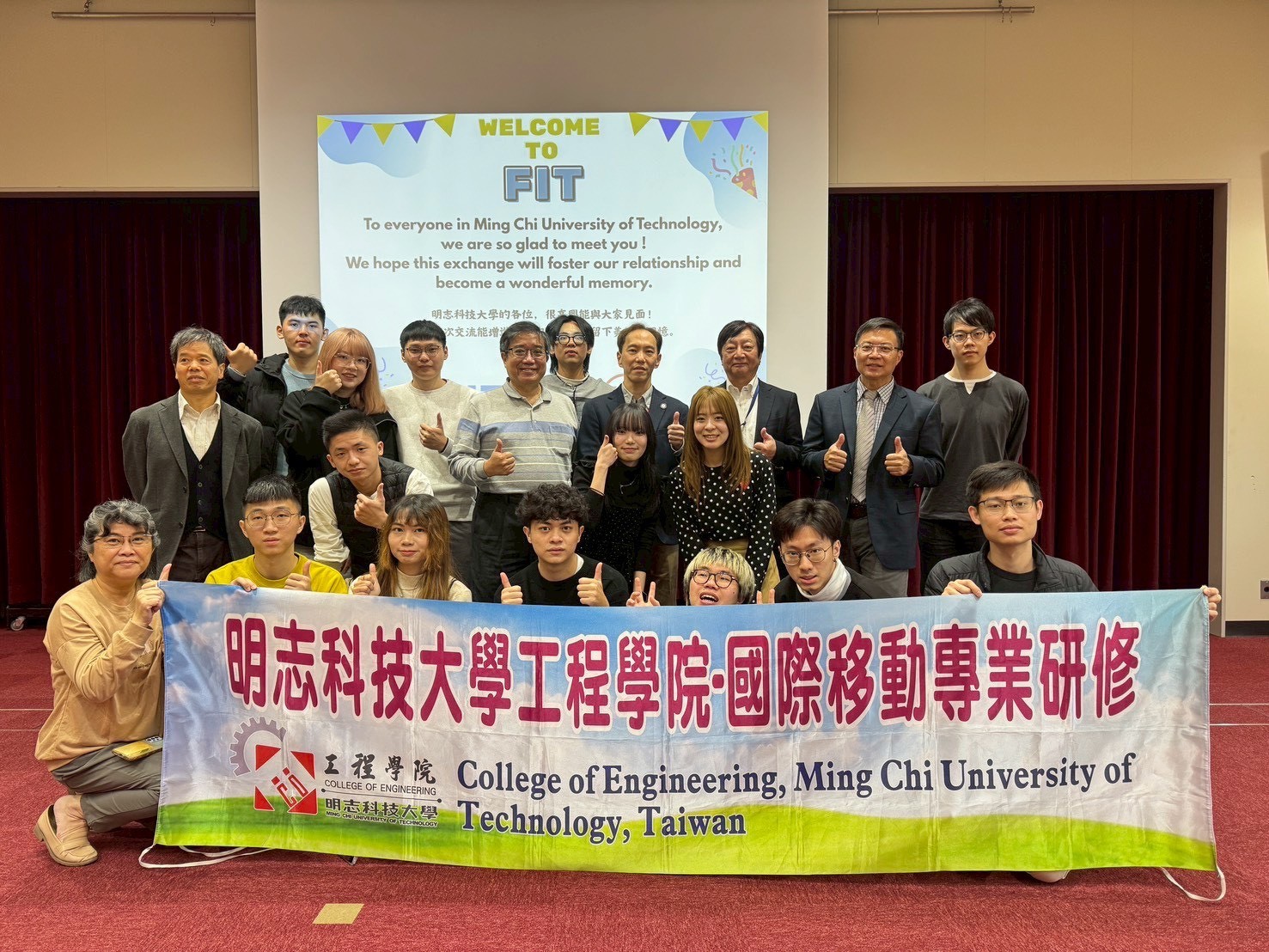
Image (No. 1) Description: Group photo of faculty and students from MCUT’s College of Engineering and the Fukuoka Institute of Technology (FIT).
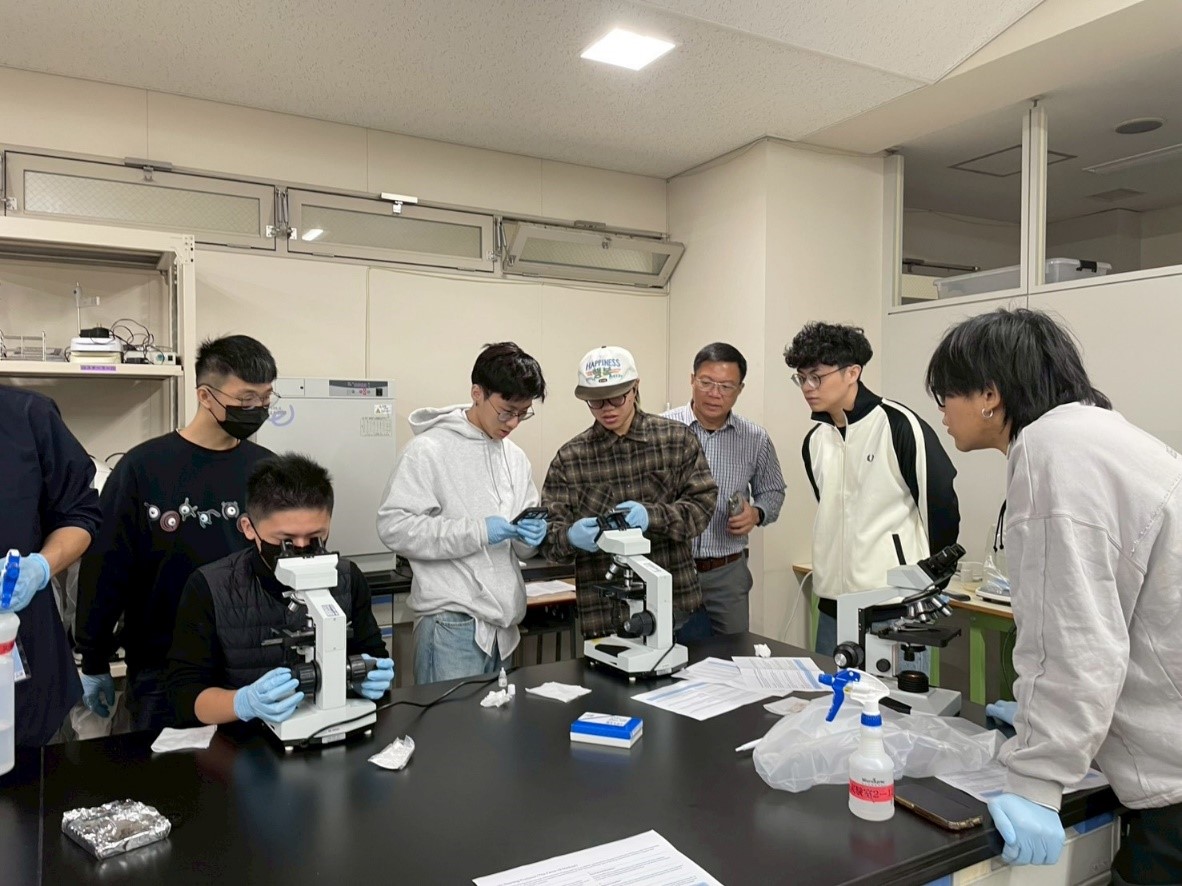
Image (No. 2) Description: MCUT College of Engineering students take part in a bacterial biofilm session under the guidance of a Japanese professor.
中文:把舌頭變成數據!明志科大工程學院赴日交流解鎖前瞻科技 五天行程像「跨域科技吃到飽」:光、材料、食品、生物一次到位 學生:五天像把課堂搬進福岡工業大學實驗室
This article is simultaneously published in the 44th edition of the SDGs E-paper.
