


Ming Chi University of Technology’s “Tsuki Design Lab” Wins the U-start Million-Dollar Entrepreneurship Grant, Showcasing Powerful Cross-Disciplinary Innovation!
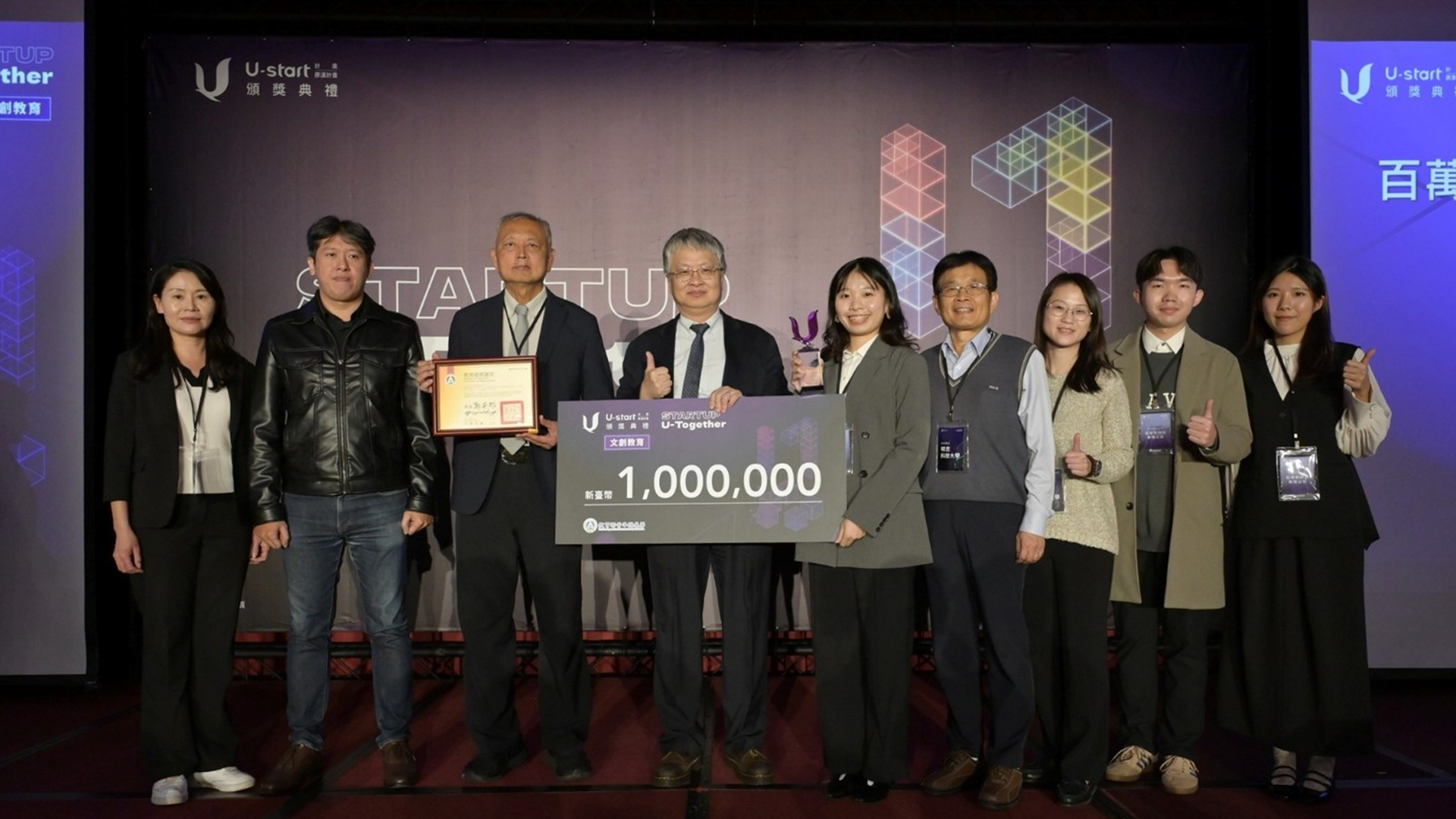
The 2025 Ministry of Education “U-start Plan for Innovation and Entrepreneurship” Award Ceremony was grandly held on November 21 at the NTU Hospital International Convention Center.
The Ming Chi University of Technology student startup team “Tsuki Design Lab” stood out among numerous competitors with its outstanding innovative product design and strong social impact. The team was recognized as a Phase II Outstanding Team in the Cultural and Creative Education category and received the highest award of NT$1 million in startup funding, showcasing the remarkable achievements of Ming Chi University of Technology in promoting innovation and entrepreneurship education.
On the day of the ceremony, President Liu, Thu-Hua, Dean of R&D Chen, Sheng-Chi, and the Innovation Incubation Center team accompanied “Tsuki Design Lab” to attend the award ceremony and exhibition, demonstrating the university’s strong support for student entrepreneurship. The award was personally presented by Mr. Liu, Kuo-Wei, Political Deputy Minister of Education, affirming the team’s excellence in practical innovation. The occasion was both solemn and highly meaningful.
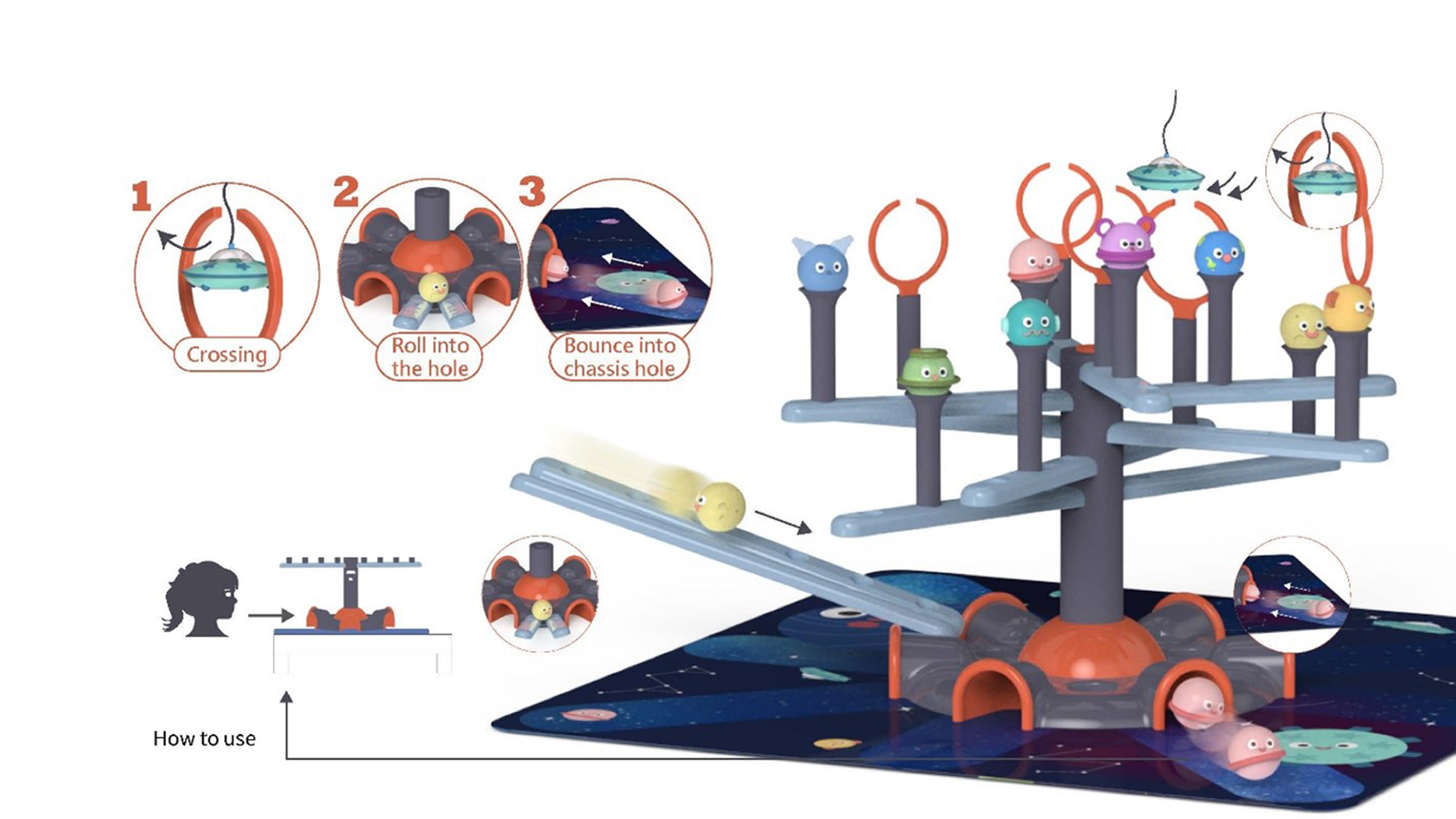
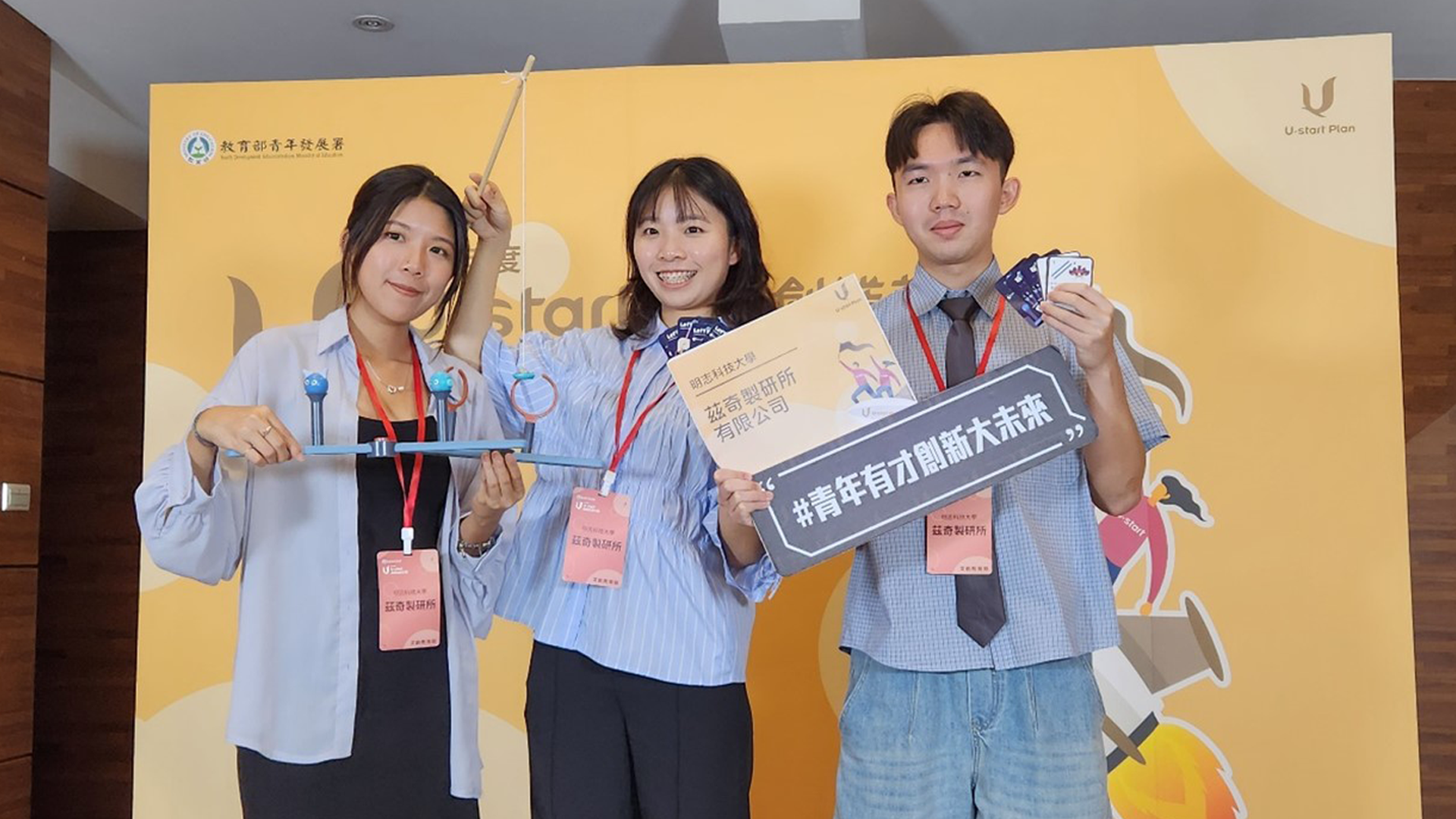
“Tsuki Design Lab” was formed by Chen, Zih-Jin, a student from the Department of Industrial Design at Ming Chi University of Technology; Liu, Wei-Lun, a student from the Department of Environmental and Safety Engineering; together with students from the University of Taipei. Centered on children’s visual health, the team is dedicated to developing innovative products and service designs. Their flagship product, “StellarVision,” integrates the concepts of “stellar/planetary exploration” and “visual gaming.” It is designed as an innovative educational tool that accompanies children’s visual development. Through gamified design, the product helps preschool and school-aged children train essential visual abilities, including spatial perception, binocular coordination, near–far focus adjustment, hand–eye coordination, as well as enhancing visual focus and image fusion capabilities.
After passing the Phase I review of the U-start Plan in May, the team received NT$500,000 in funding. Throughout the incubation period, the Innovation Incubation Center, together with Professor Li, Kai-Chu from the Department of Industrial Design, provided continuous mentorship and support. Based on the team’s needs, professional consultants and industry mentors were introduced, offering guidance in areas such as legal affairs, accounting, intellectual property, marketing, fundraising strategies, and entrepreneurial experience sharing. This comprehensive support significantly strengthened the team’s capabilities and enabled them to excel in Phase II, ultimately securing the highest award.
The Innovation Incubation Center stated that this achievement not only highlights the students’ strengths in cross-disciplinary collaboration and creative implementation, but also demonstrates the effectiveness of the university’s incubation and mentoring system. Moving forward, the university will continue to integrate internal and external resources to support students in addressing social needs through creativity and to foster more impactful innovation and entrepreneurial outcomes.
Image (No. 1) Description: President Liu, Thu-Hua of Ming Chi University of Technology, Dean of R&D Chen, Sheng-Chi, and members of the Innovation Incubation Center accompanied the Tsuki Design Lab team on stage to receive the award presented by Deputy Minister of Education Liu, Kuo-Wei.
Image (No. 2) Description: Illustration of the StellarVision product by Tsuki Design Lab
Image (No. 3) Description: Tsuki Design Lab members Chen, Zih-Jin (center), Chen, Zih-Yu (left), and Liu, Wei-Lun (right) pose for a commemorative photo during the Phase II U-start review.
中文:明志科技大學「茲奇製研所」勇奪U-start百萬創業獎金 展現跨域創新能量!
This article is simultaneously published in the 44th edition of the SDGs E-paper.
