


Ming Chi University of Technology Focuses on River Waste, Encouraging Student Participation in Sustainability Actions to Address Challenges in the Tamsui River Basin
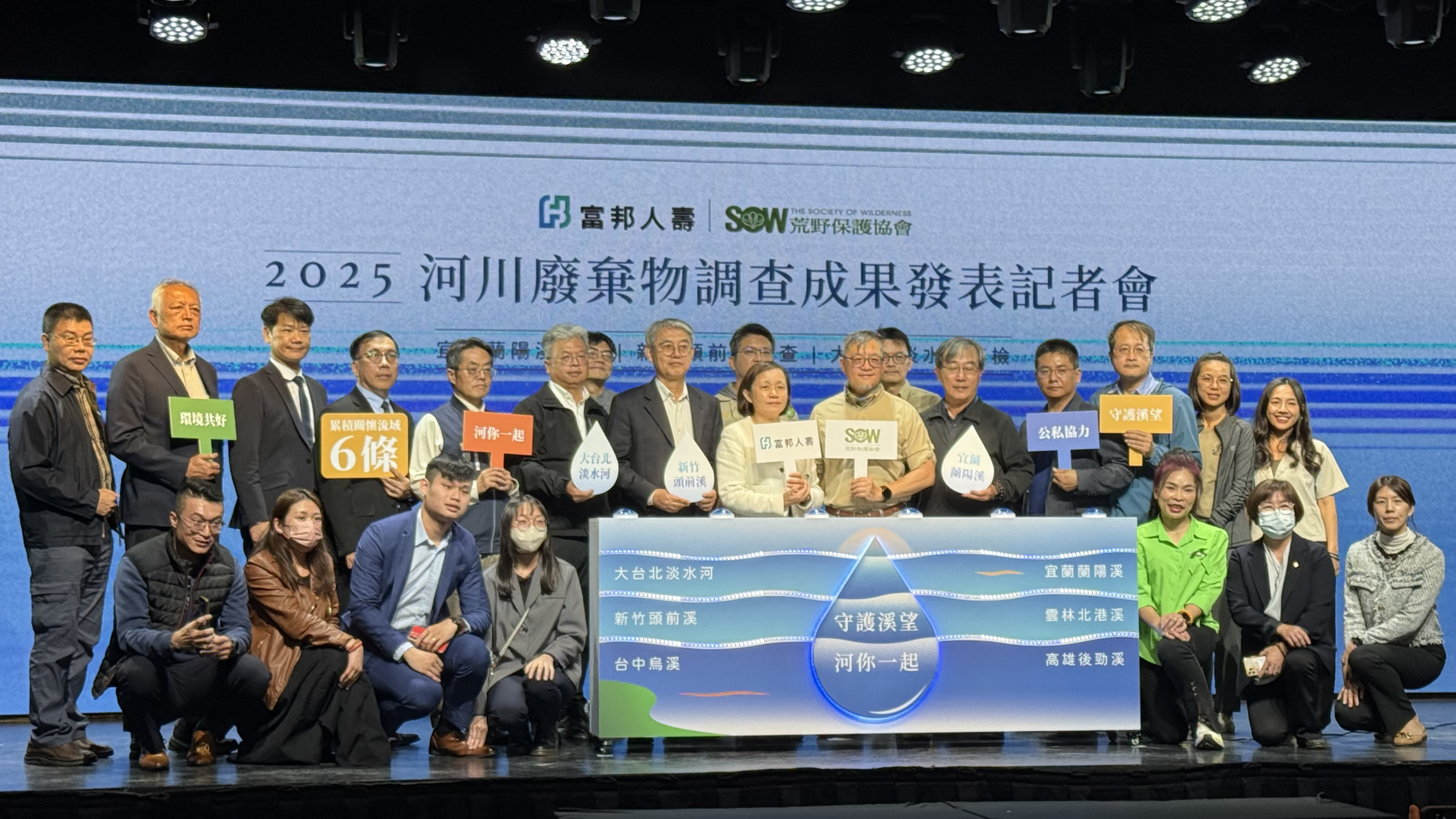
Ming Chi University of Technology has been working since 2023 with the Society of Wilderness and the New Taipei City Government to promote the “Tamsui River Waste Rapid Screening Survey” project. On November 25, they jointly held a results press conference to present the findings of the 2025 survey. Through cross-department collaboration, public–private partnerships, and the integration of university social responsibility, Ming Chi actively participates in the governance of the Tamsui River basin through research and action, demonstrating the crucial role of higher education in sustainable environmental issues.
President Thu-Hua Liu of Ming Chi University of Technology stated that the world is actively moving toward a circular economy and waste reduction. As a technology university rooted in New Taipei, the institution deeply recognizes its responsibility for local environmental education and ecological protection. Upholding the spirit of “industry–academia service and social engagement,” Ming Chi encourages students to step beyond the campus into society—not only as observers of environmental issues, but as practitioners who create change through action. The university hopes that through collaboration with the public sector, enterprises, and civil organizations, rivers can return to their natural state and Taiwan can achieve a cleaner and safer water environment.
This year, the survey scope expanded to cover 353.5 kilometers of riverbanks within the Tamsui River basin, including the Dahan River, Xindian River, Keelung River, Tamsui River, Dake River, Nanshi River, Yingge River, Wayao Canal, Shibafen Keng River, and Gongsi Tian River. Comparing data from 2024 and 2025, although the cleanup rate across Taipei, New Taipei, Keelung, and Taoyuan has reached 66.2% since pollution hotspots were identified last year—demonstrating the effectiveness of cross-city collaboration—several new waste disposal hotspots have still emerged this year. This indicates that watershed management and waste removal efforts must continue.
A total of 339,955 liters of waste were recorded in this survey. Based on 14-liter garbage bags, this is equivalent to approximately 78.7 bags per kilometer. Single-use food-related plastic waste accounted for as much as 60% of the total, including plastic bottles, plastic bags, and beverage cups. This again highlights the public’s heavy reliance on disposable items and reveals that Taiwan still faces significant challenges in transitioning to a “circular society,” requiring joint efforts from the government, businesses, and the public.
Ming Chi University of Technology has long promoted field-based courses and University Social Responsibility (USR) projects, incorporating river and marine issues into teaching. Students are guided into real-world contexts to understand social issues and propose actionable solutions. In the future, the university will continue to advance sustainability education through interdisciplinary collaboration, environmental monitoring, and hands-on courses, supporting younger generations in understanding and engaging in watershed governance to protect valuable water resources.
For more information, please visit the Ming Chi University of Technology USR website: https://usr.mcut.edu.tw/
